AI and Computational Pathology in Triple-Negative Breast Cancer: A Comprehensive Review
A narrative review in Frontiers in Oncology analyzes how artificial intelligence and computational pathology are advancing diagnosis, prognosis, and treatment of triple-negative breast cancer, highlighting current research, challenges, and the necessity for rigorous validation before clinical integration.
Artificial Intelligence in Oncology
Part 1 of 1
Table of Contents
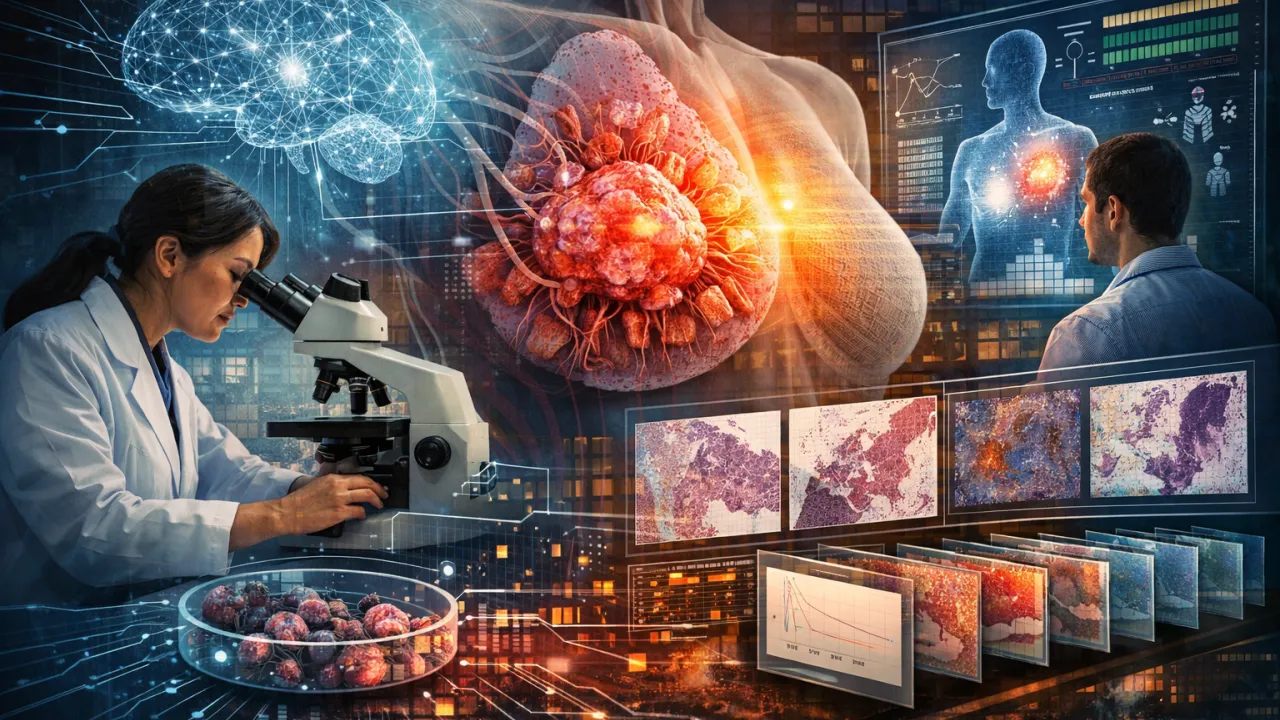
A comprehensive narrative review published in Frontiers in Oncology examines the evolving role of artificial intelligence (AI) and computational pathology in managing triple-negative breast cancer (TNBC), an aggressive subtype accounting for 10 to 15 percent of breast cancers characterized by the absence of estrogen, progesterone, and HER2 receptors. Researchers from the University of Cagliari and international collaborators evaluated developments including handcrafted pathomic feature extraction, deep learning, whole-slide imaging, vision-language systems, and multimodal AI platforms.
The review stresses that AI tools currently complement rather than replace pathologists and oncologists, with most studies being retrospective and exploratory. It highlights demographic disparities in TNBC incidence and outcomes, particularly higher rates and poorer survival among younger and Black women, cautioning that AI models trained on limited cohorts risk perpetuating biases without diverse, representative datasets.
Key applications include predicting pathological complete response to neoadjuvant therapy using deep learning on biopsy specimens and standardizing tumor-infiltrating lymphocyte scoring to improve prognostic accuracy. Although promising, molecular biomarker inference from routine stained slides lacks robust, validated models specific to TNBC.
Prognostic models such as the TRIP deep learning tool show associations with survival but require further validation before clinical decision-making. The review outlines challenges in clinical translation, including dataset shift, data leakage, and regulatory issues, calling for prospective clinical trials, standardized reporting, and integration strategies to ensure AI benefits patients without introducing automation bias.
In conclusion, computational pathology and AI hold significant promise for precision oncology in TNBC but require rigorous global collaboration and validation prior to routine clinical use.
Related Posts